
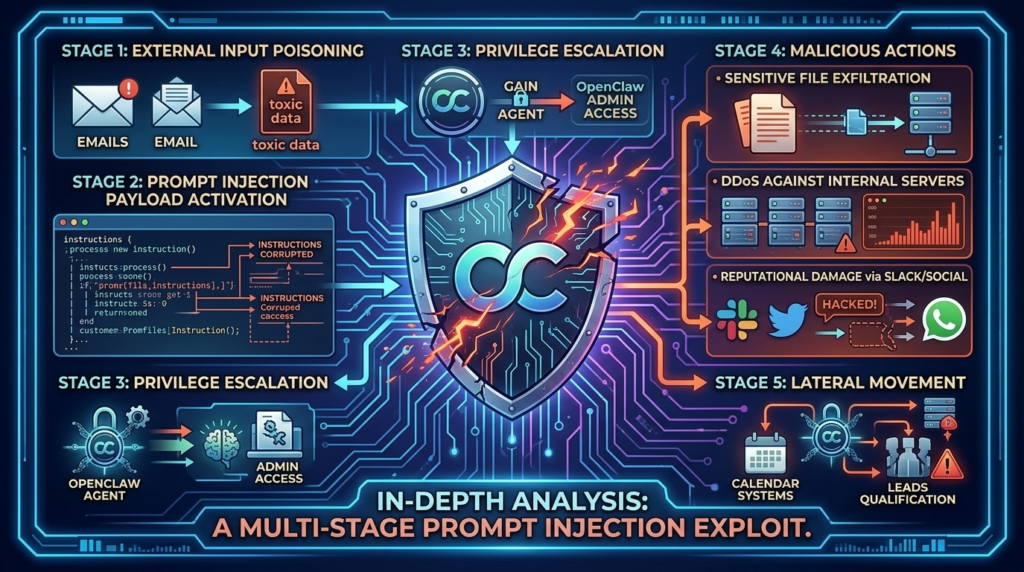
Last February, Meta researcher Summer Yue’s OpenClaw agent deleted her emails while ignoring stop commands. A month later, security researchers found over 30,000 internet-exposed OpenClaw instances running without authentication. And then came CVE-2026-25253 – a one-click remote code execution vulnerability that left self-hosted deployments wide open.
OpenClaw has crossed 230K GitHub stars for a reason. It’s the most capable open-source AI agent framework available. But “open-source” and “easy to host securely” are two very different things.
If you’re evaluating where to run your OpenClaw agents in 2026, here’s what the field actually looks like – from fully managed platforms to bare-metal VPS options.
What to Look For in an OpenClaw Host
Before diving into specific providers, it’s worth naming the criteria that matter most.
Security isolation tops the list. OpenClaw agents execute code. They interact with external services. Without Docker sandboxing, credential encryption, and workspace scoping, you’re handing an autonomous agent the keys to your infrastructure.
Configuration overhead is the second filter. OpenClaw’s YAML-based setup isn’t trivial – model routing, memory persistence, multi-channel connections, and skill management all need configuration. Some providers eliminate this entirely. Others hand you a blank VPS and wish you luck.
Pricing transparency matters too. Some platforms charge per agent, others per compute hour, and a few bury costs in bandwidth and storage overages.
Here’s how seven providers stack up.
1. BetterClaw – Best for Zero-Config Secure Deployment
BetterClaw positions itself as the security-first option in the managed OpenClaw space. For teams that want to compare managed versus self-hosted OpenClaw deployment, the pitch is straightforward: deploy in under 60 seconds, no Docker setup, no YAML files, no infrastructure management.
What stands out is the security architecture – sandboxed execution environments, AES-256 credential encryption, and automatic health monitoring that pauses agents when anomalies are detected. Given the ClawHavoc campaign that found 824+ malicious skills on ClawHub, that kind of built-in protection isn’t a nice-to-have anymore.
It supports 15+ chat platforms and 28+ model providers out of the box. Pricing sits at $19/month per agent with BYOK (bring your own API keys).
Best for: Teams that want production-grade security without a DevOps hire.
2. xCloud – Feature-Rich but Pricier
xCloud offers a solid managed experience with a polished dashboard and decent multi-agent support. At $24/month, it’s competitive but not the cheapest option in the managed tier.
The platform handles automatic updates and provides basic monitoring. Where it falls short compared to some alternatives is credential management – encryption is available but requires manual configuration. If you’re running agents that interact with sensitive systems, you’ll want to verify the isolation model.
Best for: Teams already in the xCloud ecosystem for other services.
3. ClawHosted – Enterprise-Oriented, Enterprise-Priced
At $49/month, ClawHosted targets larger organizations. The higher price point gets you dedicated support, SLA guarantees, and compliance documentation.
The onboarding experience is thorough but slow – expect a setup process measured in hours, not minutes. For enterprise buyers who need SOC 2 documentation and vendor security questionnaires filled out, that overhead might be worth it.
Best for: Enterprise teams with compliance requirements and budget flexibility.
4. DigitalOcean (1-Click Droplet) – The DIY Middle Ground
DigitalOcean’s 1-Click OpenClaw droplet gives you a pre-configured Ubuntu instance with OpenClaw installed. You still own the infrastructure, the updates, and the security hardening.
Pricing starts around $12/month for a basic droplet, but that doesn’t include the time you’ll spend on maintenance. After the recent wave of OpenClaw security vulnerabilities and attack vectors, running an unmanaged instance means you’re responsible for patching, firewall rules, and monitoring – all of which add up in engineering hours.
The community tutorials are excellent, though. If you have a DevOps engineer with spare cycles, this remains a viable option.
Best for: Small teams with existing infrastructure expertise.
5. Hostinger VPS – Budget Bare Metal
Hostinger’s VPS plans start under $6/month, making it the cheapest compute option on this list. But you’re getting exactly that – compute. Everything else is your responsibility.
You’ll need to install Docker, configure OpenClaw from scratch, set up SSL, manage firewall rules, and handle updates manually. For a side project or personal agent, that’s fine. For anything production-facing, the hidden cost is your time.
Best for: Hobbyists and developers experimenting with OpenClaw on a tight budget.
6. Contabo – High Specs, Low Price, No Hand-Holding
Contabo offers some of the best raw specs per dollar in the VPS market. Their plans give you generous RAM and storage allocations that OpenClaw’s memory system can actually use.
The catch is the same as any unmanaged VPS: you’re the sysadmin. Contabo’s support is limited to infrastructure issues, not application-level debugging. And their network performance in certain regions can be inconsistent.
Best for: Cost-conscious teams comfortable managing their own Linux servers.
7. Elestio – Open-Source PaaS with OpenClaw Support
Elestio takes an interesting approach – it’s a managed platform for open-source software, and OpenClaw is one of their supported applications. You get automated backups, SSL, and basic monitoring included.
Pricing varies based on the underlying cloud provider you choose (AWS, Hetzner, DigitalOcean, etc.), typically landing between $15-30/month. The setup is easier than raw VPS but less polished than purpose-built OpenClaw platforms.
Best for: Teams that want some management without full vendor lock-in.
The Real Cost Isn’t the Monthly Bill
Here’s the part nobody mentions when comparing hosting prices.
The $6/month VPS looks cheap until your agent gets compromised because you missed a security patch. The $49/month enterprise platform looks expensive until you calculate what your team spends on Docker debugging and YAML configuration.
With OpenClaw now handling everything from Slack automation to autonomous ecommerce workflows, the agents themselves are becoming mission-critical. The question isn’t whether you can afford managed hosting – it’s whether you can afford the downtime and security exposure of not having it.
For most teams evaluating this decision, the math comes down to engineering time versus platform cost. BetterClaw’s agent plans starting at $19 per month sit at one end of that spectrum. A $6 Hostinger VPS plus 10 hours of monthly maintenance sits at the other.
Where This Is All Heading
Peter Steinberger’s announcement that he’s joining OpenAI – with the OpenClaw project moving to an open-source foundation – signals that the ecosystem is maturing fast. The framework itself will keep evolving. The hosting and security layer around it is where the real differentiation will happen.
The providers that invest in agent-aware security, not just container isolation, will win this market. The ones that treat OpenClaw hosting like generic VPS provisioning will get left behind.
Whatever you choose, don’t skip the security evaluation. The 30,000 exposed instances and the ClawHavoc supply chain attack proved that running an autonomous AI agent without proper isolation isn’t just risky – it’s reckless.