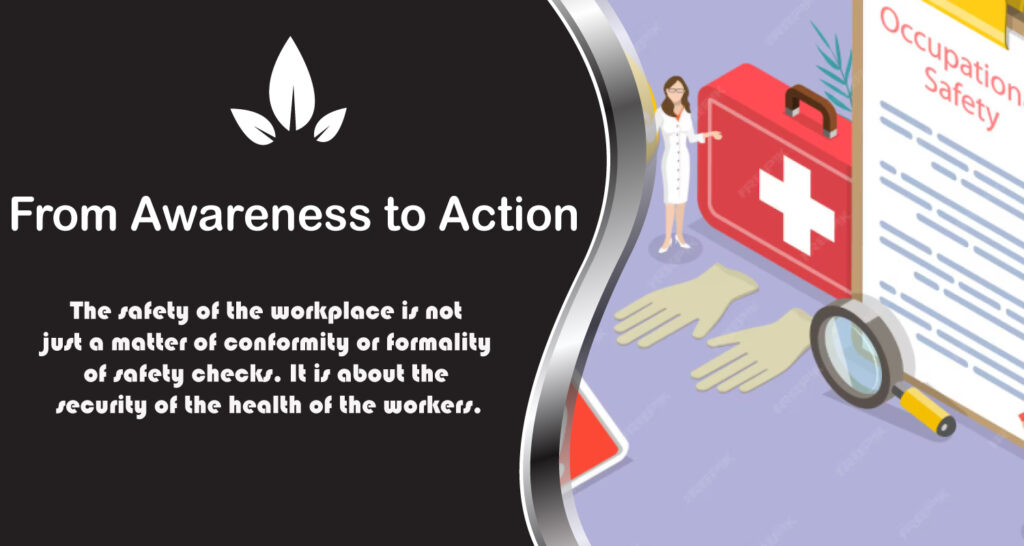

The safety of the workplace is not just a matter of conformity or formality of safety checks. It is about the security of the health of the workers and the prevention of the latter from being subjected to any form of harm. The realization of the good health of the employee at work is rooted in knowing the dangers that exist and then going ahead to make very significant moves to control them.
At this juncture, Hazard Identification and Risk Assessment, abbreviated as HIRA, come to be the pillar of safety in the workplace. Without a structured method to find hazards and assess their possible consequences, companies are basically in the dark, possibly being too late to prevent them, waiting for the incidents to take place and only then trying to eliminate their causes.
Understanding HIRA: The Foundation of Workplace Safety
HIRA is a preventive approach that enables businesses to see what dangers might occur in the workplace and what risk workers take when such hazards happen. The latter is not a single event but rather a perpetual process in tune with the outside world including changes in occupation, introduction of new machines and setting of new industry standards.
The methodology comprises three main steps. Firstly, identifying hazards calls for the teams to look thoroughly through every bit of the work done in the entire place of work to find elements that could be harmful. This is an all-encompassing exercise covering physical dangers like machines and chemicals, to even the less evident ones such as the ergonomics problems or psychosocial stressors that exist within the organization.
Secondly, risk assessments judge the probability of each hazard causing harm and the possible intensity of that harm. The resulting order of the risks helps organizations to allocate their resources starting with the ones that are most serious.
Risk control is the last of the three steps in the process where the organization arrives at which risk reduction measures are to be taken. The prescribed solution will be in accordance with the control hierarchy starting from elimination and substitution moving on to engineering controls, administrative controls and finally personal protective equipment as a last line of defense.
Integrating HIRA into Your Health and Safety Management System
A health and safety management system is the skeleton of consistent workplace safety management in all its facets. Hazard Identification and Risk Assessment (HIRA) is not an independent activity but rather a major part that reinforces every other component of the system.
Integration begins with the policy. The top management should be the first to take the lead in regular HIRA activities and also be the first to Act on the discoveries. This commitment should be openly declared in the organization’s health and safety policy.
The planning phase greatly depends on the outcome of HIRA. The risks estimated and hazards identified are the main factors that determine the setting of objectives, the development of programs and the allocation of resources. Safety planning, in the absence of proper HIRA data, becomes reactive and, in a way, wasteful.
Control of the risk identified and assessed through HIRA is put into operation in the next step. New equipment might be purchased, processes redesigned, more training provided, or new procedures established, depending on the specific actions flowing from the risk assessment.
The checking of performance very much keeps an eye on whether the controls that have been put in place are actually effective. Organizations will have to keep an eye on the level of incidents, near misses and other safety metrics, thus confirming that the risks pointed out by HIRA are really being controlled. Monitoring continually exposes gaps and so it may be that the HIRA process needs to be revisited.
Common Challenges in Implementing HIRA Effectively
In spite of these clear benefits, a lot of organizations still face the problem of HIRA not being implemented effectively. Acknowledging the typical traps can assist you in declining them at your workplace.
One of the main hurdles is considering HIRA as a procedure of filing papers instead of seeing it as a true tool for enhancement. There are some firms that carry out assessments just to please the officers or meet the requirements of the law, all this without any genuine plan to use the results of the assessment. This undermines the entire purpose and wastes valuable time.
Another issue is lack of employee involvement. The people who do the work every day often have the best insights into what hazards exist and what controls might be practical. When HIRA is conducted solely by managers or safety professionals without frontline input, critical risks can be missed.
Resource constraints also pose significant challenges. Conducting thorough HIRA requires time, trained personnel and sometimes specialized equipment for measuring exposures.
Organizations operating on tight budgets may rush through the process or skip steps entirely.
Keeping HIRA current is perhaps the biggest ongoing challenge. Workplaces are dynamic environments where new equipment is introduced, processes change and different products are handled. A HIRA that was accurate six months ago might be dangerously outdated today if not regularly reviewed and updated.
The Business Case for Prioritizing Occupational Health Through HIRA
Apart from the moral obligation to safeguard labor, there is a strong business argument for the implementation of solid HIRA procedures. Those companies that are skilled at spotting and managing risks always have a greater profit than those which are rather relaxed when it comes to safety.
Financial gains are really high and can be easily measured. The cost of workplace accidents and illnesses includes direct medical treatment and workers’ compensation as well as the indirect costs of lost productivity, training of replacement workers, time spent on investigations and possible legal claims. By carrying out effective HIRA, incidents are prevented and thereby organizations save money.
Employee Safety is the killer of productivity. Workers who have the confidence that the dangers in their environment have been dealt with can concentrate on the work at hand without being distracted or afraid. This will result in better quality output, fewer mistakes and quicker turnaround.
Strong safety records are the basis for good talent attraction and retention policies. The current employees, particularly young ones, are more and more considering the safety record of the industry along with the values of the employer in deciding the place of work. It is easier for organizations that place a high premium on the health of their workers to recruit and keep skilled workers.
Compliance with regulations becomes easier and less anxiety-inducing when a wide-ranging health and safety management system based on solid HIRA practices is in place. Instead of rushing to get ready for audits or inspections, companies with advanced systems can show they have been compliant all along as part of their everyday operations.
Conclusion
The journey from awareness to action in occupational health and safety isn’t a single step but a continuous process. HIRA and systematic risk assessment provide the roadmap, transforming general concerns about safety into specific, prioritized actions that genuinely protect workers.
Organizations that embrace this approach don’t just comply with regulations or avoid incidents. They create workplaces where safety is embedded in every decision, where risks are understood and managed proactively and where employees can focus on doing excellent work without compromising their health and wellbeing.
The question isn’t whether your organization can afford to implement robust HIRA processes. It’s whether you can afford not to. Every day without proper hazard identification and risk assessment is another day of unnecessary exposure, another opportunity for preventable incidents and another missed chance to demonstrate that your people truly are your most valuable asset.