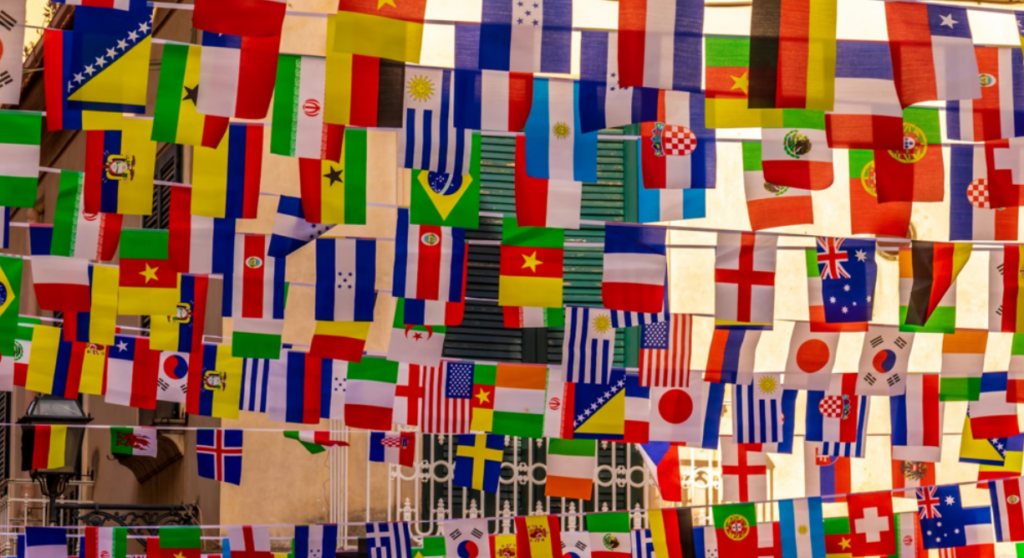

In Latin America, flags transcend their role as mere national emblems. They are vivid expressions of collective memory—woven from the threads of independence movements, cultural resilience, and shared aspirations. During the World Cup or the Olympics, when stadiums erupt in waves of green, yellow, red, and blue, these symbols become something more visceral: a declaration of belonging that unites millions across borders and generations.
The relationship between flags and sports in Latin America reveals how deeply national identity is tied to public ritual. Understanding the symbolism embedded in these designs offers insight into the region’s complex history and the emotional architecture of its societies.
How Latin American Flags Evolved Through Independence and Revolution
The flags of Latin America are products of upheaval. Most were conceived during the early 19th century, as colonies across the region fought to break free from Spanish and Portuguese rule. The designs that emerged were deliberate political statements—rejecting colonial heraldry in favor of symbols that represented new republics and their ideals.
Argentina’s sky-blue and white stripes, for instance, are said to reflect the colors of the sky during the May Revolution of 1810. Mexico’s flag incorporates the Aztec legend of an eagle perched on a cactus, a symbol that predates European contact and asserts indigenous heritage. These weren’t arbitrary aesthetic choices; they were efforts to construct a visual language of sovereignty.
Over time, many flags underwent revisions as governments changed and national identities solidified. The evolution of flag symbolism reflects broader shifts in how nations understood themselves—moving from revolutionary fervor to more stable expressions of statehood. Today’s flags carry the weight of that history, each element a reminder of the struggles that forged modern Latin America.
Decoding the Colors and Symbols That Define the Region
Latin American flags share a visual vocabulary, though each nation interprets it differently. Certain colors and motifs recur across the continent, creating a sense of regional kinship even as individual flags assert distinct identities.
- Red: Almost universally represents the blood of those who died fighting for independence. It’s a somber acknowledgment of the cost of freedom.
- Blue: Often symbolizes the sky or ocean, but can also represent justice, loyalty, or the ideals of liberty that inspired revolutionary movements.
- White: Typically stands for peace, purity, or unity—a counterbalance to the violence implied by red.
- Yellow or Gold: Frequently represents the sun, wealth, or the natural resources that define many Latin American economies.
- Stars: Used to denote provinces, states, or the unity of diverse regions within a single nation.
- Suns: A powerful symbol of life and energy, most famously featured on Argentina’s and Uruguay’s flags as the “Sun of May.”
- Coats of Arms: Many flags incorporate detailed emblems that reference specific historical events, indigenous heritage, or national values.
These elements aren’t decorative—they’re encoded messages about what each nation values and how it wants to be understood. The symbolism in Latin American flag designs reflects a region that has consistently used visual culture to assert political and cultural autonomy.
Flags as Emotional Anchors in Sports and Public Life
Nowhere is the power of Latin American flags more visible than in sports. During international competitions, flags become instruments of collective emotion—waved, worn, painted on faces, and draped over shoulders. They transform individual spectators into a unified force, creating an atmosphere that can feel almost sacred.
At the 2014 World Cup in Brazil, the sight of Argentine fans filling stadiums with their sky-blue and white flags was more than a show of support—it was a ritual of national affirmation. Similarly, Mexican supporters’ sea of green, white, and red has become iconic, a visual representation of mexicanidad that transcends the game itself.
Beyond sports, flags anchor cultural celebrations and political movements. They appear at independence day parades, protests, and festivals, serving as shorthand for complex ideas about heritage and solidarity. In diaspora communities, flags become even more potent—a way to maintain connection to a homeland that may be thousands of miles away.
For those interested in showcasing these symbols—whether for events or personal expression—suppliers such as Flags Importer provide an extensive range of high-quality Latin American flags suited for both ceremonial use and everyday display. Comparable providers like Flags.com and Annin Flagmakers also offer durable, well-crafted options within this category.
Respecting the Flag: Display and Handling Protocols
In Latin America, as elsewhere, flags are treated with reverence. Improper handling is seen not just as a mistake but as a sign of disrespect toward the nation and its history. While specific protocols vary by country, certain principles are widely observed.
- Positioning: The national flag should always occupy the place of honor—typically the center or highest point when displayed with other flags.
- Raising and Lowering: Flags should be raised briskly and lowered slowly and ceremoniously, often accompanied by the national anthem.
- Weather Considerations: Flags should not be displayed in severe weather unless they are all-weather designs. A tattered flag is considered disrespectful.
- Physical Condition: Flags must be kept clean and in good repair. Damaged flags should be retired with dignity, often through ceremonial burning.
- Ground Contact: Allowing a flag to touch the ground or water is a serious breach of protocol in most Latin American countries.
- Storage: When not in use, flags should be folded properly and stored in a clean, dry location.
These practices aren’t merely formalities—they reflect the symbolic weight flags carry. The principles of flag etiquette are taken seriously across cultures, and Latin America is no exception. Observing these protocols is a way of honoring the sacrifices and ideals the flag represents.
Flags as Foundations of Collective Identity
For Latin Americans, flags are more than symbols of statehood—they are emotional touchstones that anchor personal and collective identity. This is especially true in a region marked by migration, both internal and international. A flag can serve as a portable piece of home, a visual reminder of roots and belonging.
In immigrant communities across North America and Europe, Latin American flags appear in windows, at cultural festivals, and during national holidays. They signal presence and pride, asserting that identity doesn’t dissolve with distance. For second- and third-generation immigrants, these flags can be a way to connect with a heritage they may know only through family stories and traditions.
Within Latin America itself, flags play a unifying role in societies that are often deeply divided by class, race, and geography. During moments of crisis or celebration, the flag becomes a rallying point—a symbol that, at least temporarily, transcends internal differences. This is why flag desecration is taken so seriously; it’s seen as an attack not just on the state, but on the shared identity the flag represents.
The emotional power of flags also explains their prominence in political movements. Whether carried by protesters demanding change or displayed by governments asserting authority, flags are tools of persuasion and solidarity. They communicate complex ideas—about justice, sovereignty, and belonging—in a single, instantly recognizable image.
Why Understanding These Symbols Matters
Latin American flags are dense with meaning, each color and symbol a reference to historical struggles, cultural values, and national aspirations. To understand these flags is to gain insight into the region’s identity—how it sees itself and how it wants to be seen by the world.
As these flags continue to wave at stadiums, festivals, and protests, they remind us that symbols matter. They shape how communities understand themselves and how they relate to one another. In a globalized world where identity can feel fragmented, flags offer a sense of continuity and coherence—a visual language that speaks to shared history and collective hope.
For anyone interested in exploring the full range of these powerful symbols, resources like the CIA World Factbook provide detailed information on the flags and national symbols of countries across Latin America, offering context that deepens appreciation for their significance.